Article Plan: “List in a Fancy Witchcraft Guide” NYT Crossword
This article dissects the New York Times crossword clue: “List in a fancy witchcraft guide?”. We’ll explore the solution, “CURSIVECURSES,” its etymology, and the broader context of witchcraft within crosswords.

The intersection of puzzles and the occult holds a unique fascination for many. Crossword puzzles, with their demand for clever wordplay and broad knowledge, frequently tap into popular culture and historical themes – and witchcraft is no exception. The recent New York Times crossword clue, “List in a fancy witchcraft guide?” exemplifies this trend, sparking considerable discussion amongst solvers.
Witchcraft, steeped in mystery and ancient traditions, provides a rich tapestry of imagery and terminology perfect for cryptic clues. The allure lies in the challenge of decoding these references, requiring not just vocabulary but also a degree of familiarity with magical lore. This particular clue, appearing on June 6th and 7th, 2024, proved particularly engaging, prompting solvers to consider the intersection of script, spells, and historical texts. The puzzle’s popularity demonstrates a growing interest in exploring these themes through intellectual recreation.
The NYT Crossword & Thematic Clues
The New York Times crossword is renowned for its sophisticated clue writing and challenging puzzles, often incorporating thematic elements that resonate with current cultural trends or historical periods. The June 6th, 2024 puzzle, featuring the clue “List in a fancy witchcraft guide?” is a prime example of this approach. The crossword consistently presents clues that demand more than simple definition recall; they require lateral thinking and an understanding of nuanced connections.
Thematic clues, like this one, frequently rely on wordplay, double meanings, and a degree of specialized knowledge. The NYT crossword editors skillfully craft these clues to be both solvable and intellectually stimulating. This particular clue’s success stems from its clever combination of “list” and the evocative imagery of a “fancy witchcraft guide,” hinting at a specific type of written compilation. The puzzle’s daily format and broad readership contribute to its influence in popularizing such thematic explorations.
Understanding the Clue: “List in a Fancy Witchcraft Guide?”
Deconstructing the clue reveals a layered request for a specific type of compilation. “List” immediately suggests an enumeration of items, while “fancy witchcraft guide” narrows the scope considerably. The adjective “fancy” is crucial; it implies something beyond a simple inventory, hinting at an ornate or deliberately styled presentation. This isn’t merely a shopping list for spell ingredients, but something more elaborate, perhaps a meticulously handwritten record.
The clue leverages the popular fascination with witchcraft, a subject often depicted with detailed texts and esoteric knowledge. The question mark indicates a playful, indirect definition, rather than a straightforward synonym. Solvers are prompted to consider what form a list within such a guide might take, rather than what might be listed. The combination of these elements creates a challenging yet solvable puzzle component, demanding both vocabulary and conceptual thinking.
The Solution: Cursivecurses ー A Deep Dive
“Cursivecurses” elegantly resolves the clue, functioning on multiple levels of interpretation. The solution is a portmanteau, cleverly combining the writing style “cursive” with the magical element of “curses.” This fusion directly addresses the “fancy witchcraft guide” aspect, suggesting a beautifully penned, yet potentially malevolent, compilation. The thirteen-letter length perfectly fits the crossword grid, confirming its validity.
The brilliance lies in the implied imagery: a spellbook meticulously inscribed in flowing cursive, detailing various incantations and hexes. It evokes a sense of historical authenticity, aligning with the traditional depiction of witchcraft. While other answers might touch upon aspects of the clue, “cursivecurses” uniquely encapsulates both the aesthetic and thematic requirements. It’s a satisfying answer that rewards solvers with a clever and conceptually rich solution, demonstrating the puzzle’s ingenuity.
Etymology of “Cursive” and its Historical Context
The word “cursive” traces its origins back to the Italian word “corsivo,” meaning running or flowing. This, in turn, derives from “corso,” signifying a course or race – referencing the speed at which the handwriting is executed. Cursive developed as a practical means of faster writing, evolving from earlier forms of handwriting like Roman capitals.
Historically, cursive scripts flourished from the Middle Ages onward, becoming the dominant style for everyday writing and formal documents. Its flowing, connected letters allowed for greater efficiency in penmanship. Before the widespread adoption of printing, skilled scribes meticulously crafted manuscripts in various cursive styles. The aesthetic quality of cursive also elevated it beyond mere practicality; it became associated with elegance and education. This historical connection to skilled writing lends a layer of sophistication to the “cursivecurses” solution, hinting at a carefully crafted magical text.
Etymology of “Curses” and its Magical Significance
The word “curse” stems from the Old English “curs,” meaning an exclamation invoking harm or ill fortune. This root connects to the Latin “cursus,” signifying a running or course – ironically mirroring the flow of cursive writing! Historically, curses were believed to be potent expressions of intent, capable of influencing events and individuals through supernatural means.
Within witchcraft and magical traditions, curses represent a deliberate act of directing negative energy; They aren’t simply angry outbursts; traditionally, they involved specific rituals, incantations, and often, meticulously crafted lists of ingredients or conditions. The power of a curse was thought to reside in the precision and focused will of the practitioner. Therefore, the inclusion of “curses” within a “fancy witchcraft guide” suggests a serious, detailed approach to magical workings, aligning with the idea of a comprehensive and authoritative text. The very notion evokes ancient spells and potent intentions.
Why “Cursivecurses” Fits the Witchcraft Theme
“Cursivecurses” brilliantly merges two key elements suggested by the clue: a specific form of list-making (cursive) and the content of that list (curses). Witchcraft, particularly in historical contexts, wasn’t a haphazard practice. It demanded meticulous record-keeping, often in handwritten form – cursive being a common script for spellbooks and grimoires.
The combination isn’t merely semantic; it evokes the image of carefully inscribed spells, painstakingly written lists of ingredients, or detailed accounts of magical workings. A “fancy witchcraft guide” wouldn’t present curses in a modern, typed format. It would likely feature elegant, flowing cursive script, lending an air of authenticity and power. The solution cleverly implies a deliberate, artistic, and potentially dangerous practice, perfectly encapsulating the mystique and complexity associated with traditional witchcraft and its documented rituals.
Witchcraft Guides: A Historical Overview
Throughout history, individuals seeking knowledge of magical practices have relied on compiled texts – the precursors to a “fancy witchcraft guide.” These weren’t standardized manuals, but rather collections of lore, recipes, and rituals passed down through generations, often evolving with each transcription. Early examples, emerging from the medieval and Renaissance periods, weren’t presented as cohesive systems, but as fragmented notes and observations.
The demand for organized magical knowledge spurred the creation of more formal guides. These texts served as repositories for practical magic, herbalism, astrology, and demonology. They often included detailed lists – crucial for successful spellcasting – of ingredients, planetary correspondences, and incantations. The very notion of a “guide” suggests a structured approach to a complex and often secretive art, mirroring the crossword clue’s implication of a curated and refined resource.
Grimoires and Spellbooks: Early Examples of “Fancy Guides”

Grimoires, often considered the most elaborate “fancy guides” of their time, emerged in the medieval and Renaissance periods as meticulously compiled books of magic. Unlike simple recipe collections, grimoires aimed for a comprehensive system of magical operation, frequently including detailed instructions for summoning spirits, creating talismans, and performing complex rituals. Notable examples like the Key of Solomon and the Lemegeton (including the Ars Goetia) were often beautifully illuminated, reflecting their status as prized possessions.
Spellbooks, while sometimes less ornate, also functioned as personalized guides. They contained individualized collections of spells, charms, and remedies, often incorporating handwritten lists of ingredients and specific instructions. The “fancy” aspect wasn’t always in the book’s physical presentation, but in the perceived power and effectiveness of the contained knowledge, making them highly valued resources for practitioners.
The Role of Lists in Traditional Witchcraft
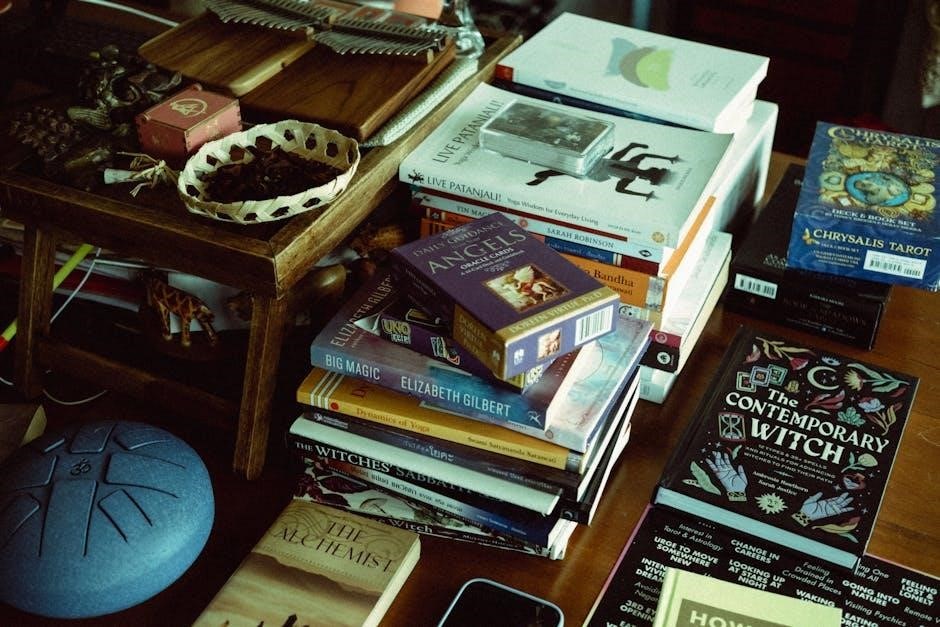
Lists are fundamental to the practice of traditional witchcraft, serving as organizational tools for complex magical workings and repositories of essential knowledge. They aren’t merely convenient; they represent a structured approach to harnessing natural forces and spiritual energies. Historically, witches relied heavily on meticulously compiled lists to ensure accuracy and potency in their spells and rituals.
These lists weren’t simply about remembering ingredients or steps. They embodied a system of correspondences – linking herbs, crystals, colors, deities, and spirits to specific intentions. The act of creating and referencing these lists was itself a magical practice, reinforcing the practitioner’s connection to the elements and the unseen world. A well-maintained list was a key component of a successful magical practice, mirroring the “fancy guide” concept.
Types of Lists Found in Witchcraft Texts
Witchcraft texts, particularly grimoires and spellbooks, are replete with diverse types of lists, each serving a specific magical purpose. Perhaps the most common are ingredient lists, detailing the precise components needed for potions, charms, and spells – often specifying quantities and preparation methods. Equally prevalent are lists of correspondences, meticulously linking herbs to planets, crystals to chakras, colors to emotions, and so on.

Beyond these, one finds lists of deities and spirits, outlining their attributes, offerings, and appropriate invocations. Some texts include lists of days and hours considered auspicious for particular workings, or lists of magical tools and their uses; These weren’t random collections; they were carefully curated systems designed to facilitate effective spellcasting and deepen the practitioner’s understanding of the magical world, fitting the idea of a “fancy guide” containing organized information.
Ingredient Lists for Potions and Spells
Ingredient lists are foundational to practical witchcraft, appearing prominently in historical and contemporary spellbooks. These aren’t simply grocery lists; they’re highly specific, often detailing not just what to use, but how it was harvested – under what moon phase, from what location, and even with what intention. Common ingredients include herbs (like mandrake, vervain, or rosemary), minerals (such as sulfur or salt), animal parts (historically, though less common now), and curios (like ribbons or personal effects).
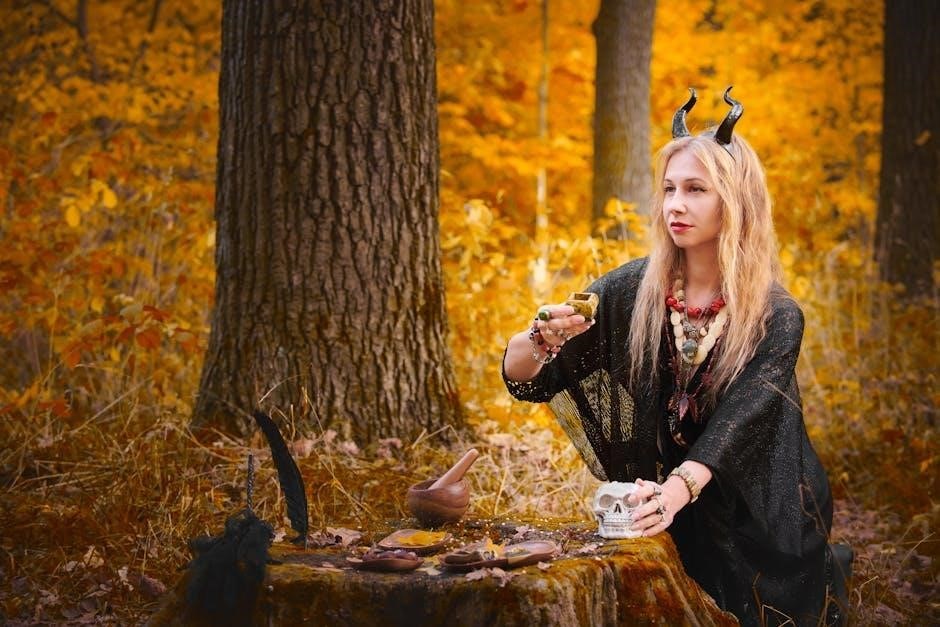
The precision reflects the belief that the energetic signature of each component contributes to the spell’s outcome. A “fancy witchcraft guide” would likely present these lists with detailed descriptions of each ingredient’s properties and correspondences. Variations exist – some lists are short and simple, others incredibly lengthy and complex, reflecting the power and intricacy of the desired magical effect.
Lists of Correspondences (Herbs, Crystals, Colors)
Beyond ingredients, “fancy witchcraft guides” heavily feature lists of correspondences – intricate systems linking various elements to magical intentions. These charts connect herbs to planets, crystals to chakras, colors to emotions, and deities to specific days of the week. For example, rosemary might correspond to remembrance and protection, amethyst to spiritual awareness, and red to passion or courage.
These aren’t arbitrary associations; they stem from centuries of observation, folklore, and symbolic interpretation. A well-crafted guide would present these correspondences in a clear, organized manner, allowing practitioners to build spells and rituals based on layered symbolism. Understanding these connections is crucial for directing energy effectively. The complexity and depth of these lists are hallmarks of a sophisticated approach to witchcraft, fitting the “fancy” descriptor of the crossword clue.
Lists of Deities and Spirits
A truly comprehensive “fancy witchcraft guide” wouldn’t be complete without detailed lists of deities, spirits, and entities practitioners might invoke. These aren’t simple name drops; they include descriptions of each being’s attributes, associated symbols, offerings they prefer, and the types of magic they govern. Guides often categorize spirits – elemental beings, ancestral spirits, or deities from various pantheons – providing a structured approach to working with them.
Such lists often detail planetary correspondences for deities (e.g., Mars linked to Ares/Tyr), further solidifying the interconnectedness of magical systems. The inclusion of seals, sigils, or invocatory phrases alongside each entry elevates the guide’s sophistication. These detailed compendiums demonstrate a deep engagement with magical tradition, aligning with the crossword’s implication of a refined and elaborate witchcraft resource. Careful cataloging of these entities was, and remains, a cornerstone of serious magical practice.
Cursive Writing and its Connection to Magic
The choice of “cursive” in the solution “CURSIVECURSES” isn’t accidental; cursive writing historically held a unique place in magical practice. Before the widespread adoption of typewriters and computers, magical manuscripts – grimoires and spellbooks – were painstakingly handwritten, often in elaborate cursive scripts; This act of manual inscription was believed to imbue the words with the writer’s personal energy and intention, strengthening the spell or ritual.
The flowing, connected nature of cursive was seen as mirroring the continuous flow of magical energy itself. The deliberate formation of each letter became a meditative act, a focused channeling of will. Furthermore, the aesthetic quality of beautiful cursive handwriting was considered important, reflecting the practitioner’s dedication and skill. This connection between script and spellcasting elevates the crossword’s solution beyond a simple wordplay answer, hinting at a deeper understanding of magical tradition.
Historical Use of Cursive in Magical Manuscripts
Throughout history, cursive handwriting dominated the creation of magical texts, serving as more than just a method of recording information. Grimoires like the Picatrix and the Key of Solomon, foundational texts for Western esoteric traditions, were meticulously copied by hand, utilizing various cursive styles depending on the era and region. These weren’t simply transcriptions; each scribe often added personal annotations, sigils, and embellishments, further personalizing the magical work.
The act of copying itself was considered a magical operation, reinforcing the spells and rituals contained within. The physical effort and focused intention involved were believed to amplify the text’s power. Different inks, made from natural ingredients, were also chosen for their specific magical properties. Consequently, the cursive script wasn’t merely a stylistic choice, but an integral component of the manuscript’s efficacy, linking the writer directly to the magical current.
The Aesthetic of Cursive and its Symbolic Meaning
The flowing, interconnected nature of cursive writing inherently possesses a symbolic resonance within a magical context. Unlike the rigid structure of print, cursive mimics the continuous flow of energy believed to underpin the universe – a concept central to many witchcraft traditions. The loops and flourishes aren’t merely decorative; they represent the winding paths of fate, the interconnectedness of all things, and the subtle energies that weave through existence.
This aesthetic also evokes a sense of secrecy and personalization. The unique character of each individual’s cursive script adds an element of the bespoke, suggesting a spell or ritual tailored specifically to the practitioner. The visual complexity can be seen as mirroring the intricate layers of the spiritual world, inviting deeper contemplation and engagement with the magical text. It’s a visual language that speaks to intuition and the subconscious, enhancing the overall magical experience.
Alternative Solutions Considered (and Why They Didn’t Fit)
Numerous potential answers were explored before arriving at “CURSIVECURSES,” each falling short due to varying degrees of thematic or length constraints. Initial considerations included “SPELLLISTS” and “POTIONRECIPES,” directly referencing common witchcraft components, but lacked the ‘fancy’ descriptor implied by the clue. “INCANTATIONS” felt too specific, not encompassing a broader ‘list’ format.

Other attempts, like “HERBALLISTS” or “CRYSTALLISTS,” focused on practitioners but didn’t address the listing aspect. Several options were simply too short to fill the thirteen-letter requirement. The key was finding a solution that combined the idea of a written compilation with a distinctly magical element. “CURSIVECURSES” uniquely satisfied both criteria, blending the form of writing (cursive) with the content (curses), creating a clever and fitting answer that resonated with the puzzle’s overall theme.
Future Witchcraft-Themed Crossword Clues: Predictions
Given the success of “List in a fancy witchcraft guide?” we anticipate a rise in similar, cleverly-worded clues drawing from magical lore. Future puzzles might feature “Herb for protection, perhaps?” (ROSEMARY) or “Cauldron’s companion?” (NEWT). Expect clues referencing specific deities – “Greek goddess of magic” (HECATE) – or tools like “Divination disks” (I CHING).
The NYT crossword could explore the history of witchcraft with clues like “Salem accuser’s claim” (SPECTER) or delve into spell components: “Ingredient for a love potion?” (VERVEIN). We predict clues playing on wordplay, such as “Bewitching hour?” (WITCHINGHOUR). The increasing popularity of neopaganism and witchcraft suggests a rich vein of thematic material for crossword constructors, promising more enchanting and challenging puzzles ahead, blending knowledge with linguistic skill.
The “List in a fancy witchcraft guide?” clue exemplifies the delightful intersection of linguistic ingenuity and esoteric knowledge. Solving it isn’t merely about knowing vocabulary; it demands a leap of imagination, connecting “cursive” with the concept of spell lists and “curses.” This puzzle highlights how wordplay itself can feel almost magical – a conjuring of meaning from seemingly disparate elements.
The NYT crossword’s embrace of witchcraft themes reflects a broader cultural fascination. It demonstrates how puzzles can be more than just entertainment, serving as portals to explore history, mythology, and alternative belief systems. “CURSIVECURSES” isn’t just an answer; it’s a key unlocking a world of grimoires, spells, and the enduring allure of the mystical. Ultimately, the magic lies in the clever construction and the solver’s satisfying “aha!” moment.